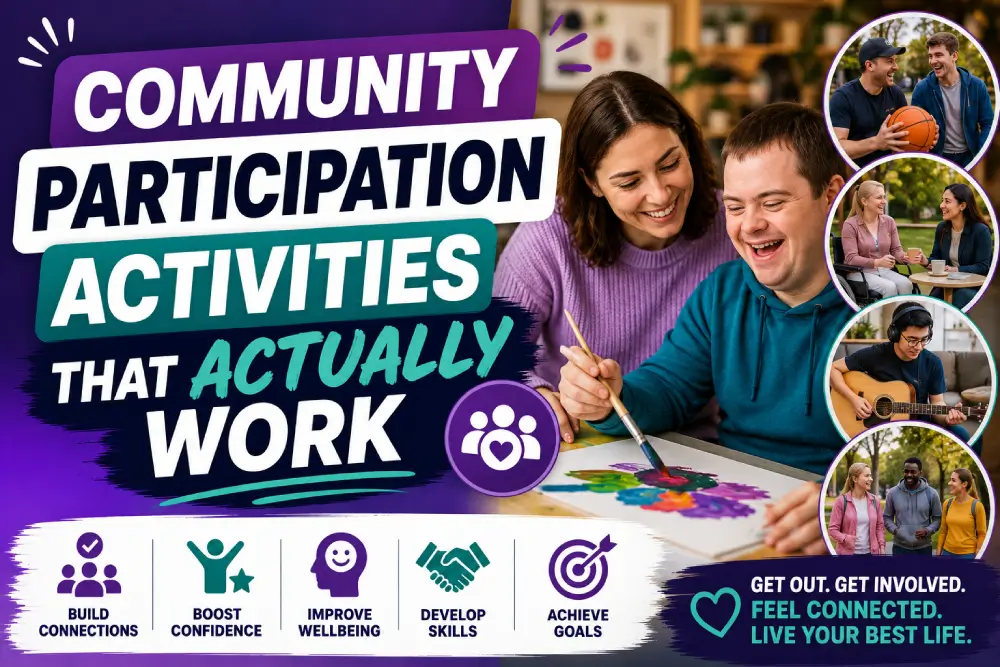
Community participation is funded by the NDIS so participants can be part of their communities. Some participants get great value out of it. Others end up doing the same uninspiring outing every week. The difference is usually in how it’s set up. Here’s what works.
Start With What You Actually Want to Do
Not what your support worker thinks you should do. Not what your family thinks would be good for you. What you actually enjoy. If you’ve always loved fishing, that’s the place to start, not a craft group at the local community centre. Community participation should match the participant, not the other way around.
Build From Interests, Not Categories
The NDIS thinks in categories: social activities, recreational activities, learning activities. But people don’t think that way. People think “I like watching sport” or “I want to garden” or “I miss going to the pub.” Start with what’s meaningful to you and figure out which category it fits into later.
Preparation Is Part of the Activity
If the activity is going to a community garden, the prep includes things like checking the weather, getting dressed for the conditions, packing a bottle of water, and making sure you’ve got what you need. This is part of the support, and it’s worth more than the activity itself in some cases. Building the routine of preparing for activities builds skills that last.
Mixing Structured and Unstructured Activities
Some participants do best with regular weekly activities at set times: gym Tuesday, book club Thursday, market Saturday. Others prefer flexibility. Most people benefit from a mix: some regular anchors plus some variety.
Building Real Community Connection
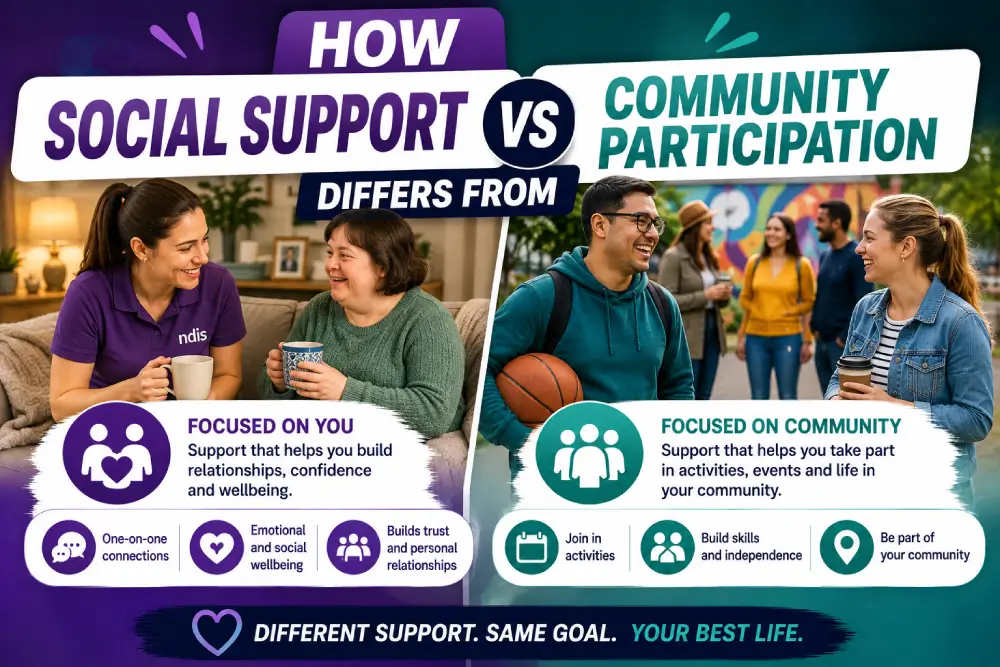
Use community participation to build community connection, not just attend events. The point isn’t just being out of the house. It’s being known in places. Going to the same cafe regularly so the staff know your name. Joining a regular group so you build relationships with other members. This kind of belonging is harder to manufacture but is more meaningful than just attendance.
Local Western Sydney Options Worth Trying
Mount Druitt has its hub. Blacktown has Westpoint and the showground. Penrith has the river walk and Panthers Precinct. These aren’t exotic destinations but they’re accessible, free or cheap, and they have things going on that suit a wide range of interests. Some of the best community participation happens within five kilometres of home.
It’s Okay If Something Doesn’t Work
The first community activity you try might not stick. That’s normal. Trying things and rejecting them is how you find what does work. A good support worker helps you try new things and reads your reactions. If something isn’t your thing, stop doing it. Don’t keep going to a craft group out of politeness.
Measuring Success Beyond the Activity Itself
Sometimes a successful outing is one where you got out of the house, even if the activity itself was nothing special. Sometimes the value is in the conversation with the support worker, not the destination. Success has many forms.
Building Skills Along the Way
Going to the shops with a support worker can be just an outing, or it can be a chance to practice using the bus, ordering at a cafe, or managing money. The same activity can be a low-stakes outing or a skill building exercise depending on how it’s structured. Talk to your support worker about goals you want to work toward.
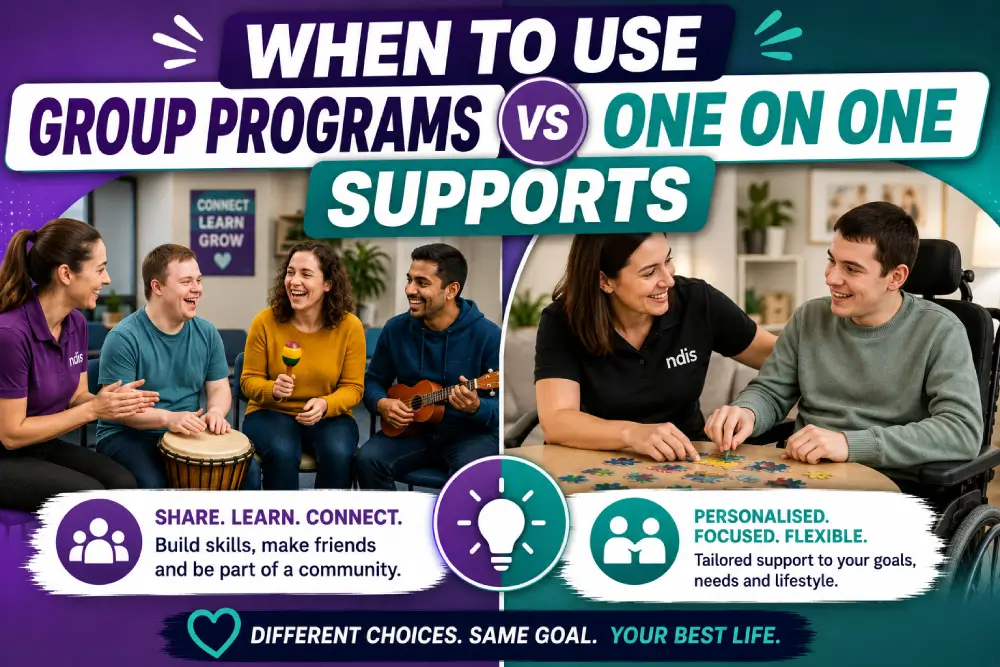
When Group Activities Work Better
Some participants do better in group programs than one on one outings. Day programs, group exercise classes, social clubs. The structure of the group, the regularity, and the chance to build peer relationships works for some people. If you’re isolated and one on one outings feel like more time with paid staff, a group might suit you better.
Tracking What Works for Plan Reviews
Keep a simple note of which activities you enjoyed, which you didn’t, and what you’d like to try next. This helps your support worker plan and helps you at plan review. Evidence that you’ve used your community participation funding well makes it easier to maintain or increase that funding.
Community participation done right is one of the most life-changing parts of the NDIS. Done badly, it’s an expensive way to fill time. The difference is in the planning and the worker, more than the funding amount.
Frequently Asked Questions
What counts as NDIS community participation?
Any funded activity that gets you engaged in your community — social, recreational, or learning activities — chosen around what you genuinely enjoy rather than a fixed category.
Do I have to choose activities my family thinks are good for me?
No. Community participation should reflect what you actually want to do, not what family or support workers think is best.
What if I try an activity and don’t enjoy it?
Stop doing it and try something else. Trying and rejecting activities is a normal part of finding what actually works for you.
Are group programs better than one-on-one outings?
Neither is universally better. Groups suit participants who want structure and peer connection; one-on-one suits participants who prefer flexibility or find groups overwhelming.
How do I use community participation funding well in Western Sydney?
Mix regular local favourites (like Mount Druitt Hub or Westpoint Blacktown) with occasional new experiences, and track what works so you have evidence for your next plan review.