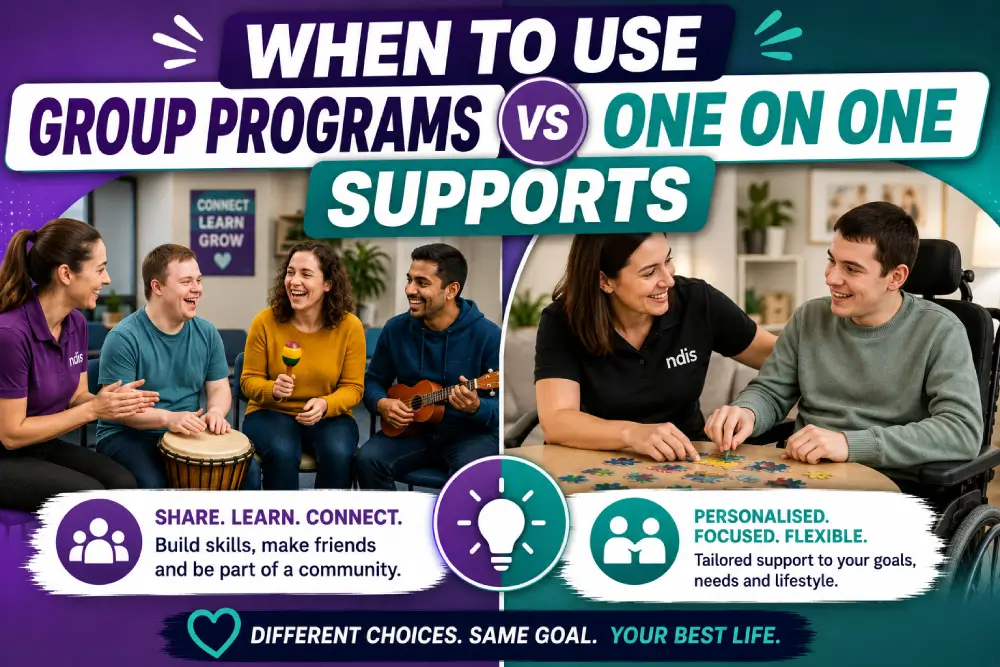
NDIS funding can pay for one on one support or for group programs. Both have their place. Choosing the right one depends on what you’re trying to achieve and how you operate. Here’s how to think about it.
What One-on-One Support Offers
One on one support gives you a worker focused entirely on you. They learn your preferences, work at your pace, and adapt to your needs. The trade off is cost and intensity. One on one support uses more of your funding per hour and means a lot of close engagement with one paid person.
What Group Programs Offer
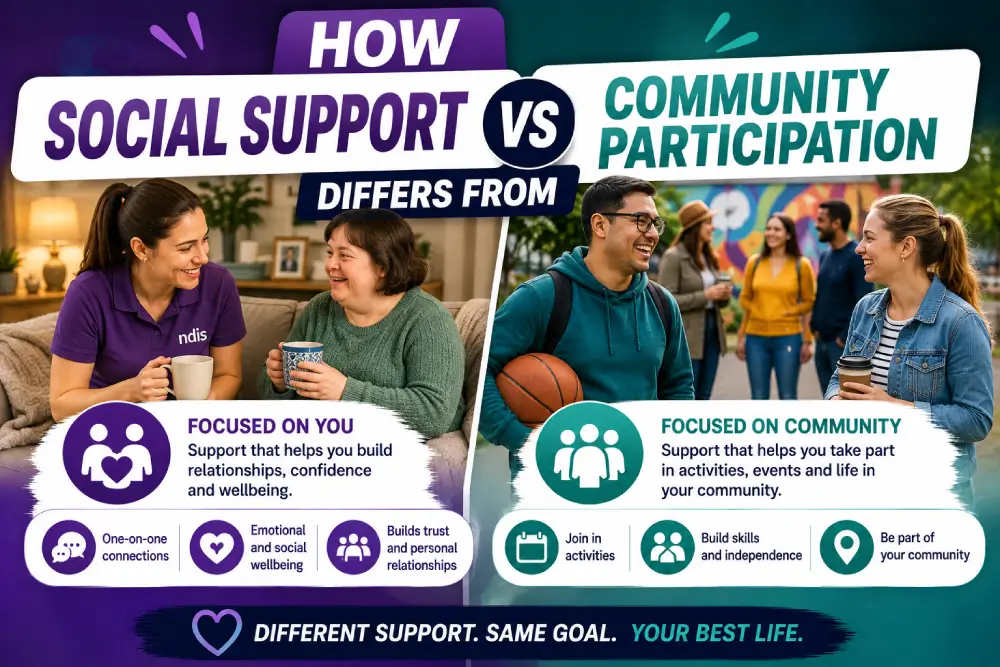
Group programs give you peer interaction, structure, and lower per hour costs. The trade off is that the program’s pace and structure don’t always match yours, and you’re sharing a worker with others.
Who’s Better Suited to One-on-One
People who find groups overwhelming. People with sensory sensitivities that crowds make worse. People with significant communication differences that are easier to manage in a quiet setting. People whose needs require dedicated attention from a worker.
Who’s Better Suited to Groups
People who feel isolated and would benefit from peer connection. People who are working on social skills. People who need structured routines that programs provide. People who’d benefit from peer modelling, where they see other participants doing things they’re working toward.
Why Many Participants Benefit From Both
Maybe one on one personal care because that has to be private and tailored. Maybe one on one community access because the participant needs intensive support in public settings. But also a weekly group program for social connection. The combination uses different parts of your funding and serves different purposes.
What Makes a Group Program Good (or Not)
A good group program has skilled facilitators, a stable group, meaningful activities, and a structure that supports interaction. A bad group program is unstructured, has high turnover, and feels more like babysitting than participation. Check programs out before committing. Visit. Watch a session. Talk to current participants.
Day Programs Explained
Day programs run for a few hours up to a full day, often four or five days a week. They’re popular post school for participants who’ve left school but aren’t in employment or further study. The good ones have varied activities, real opportunities for skill development, and manageable group sizes. The bad ones can feel like adult childcare.
Specialty and Mainstream Groups
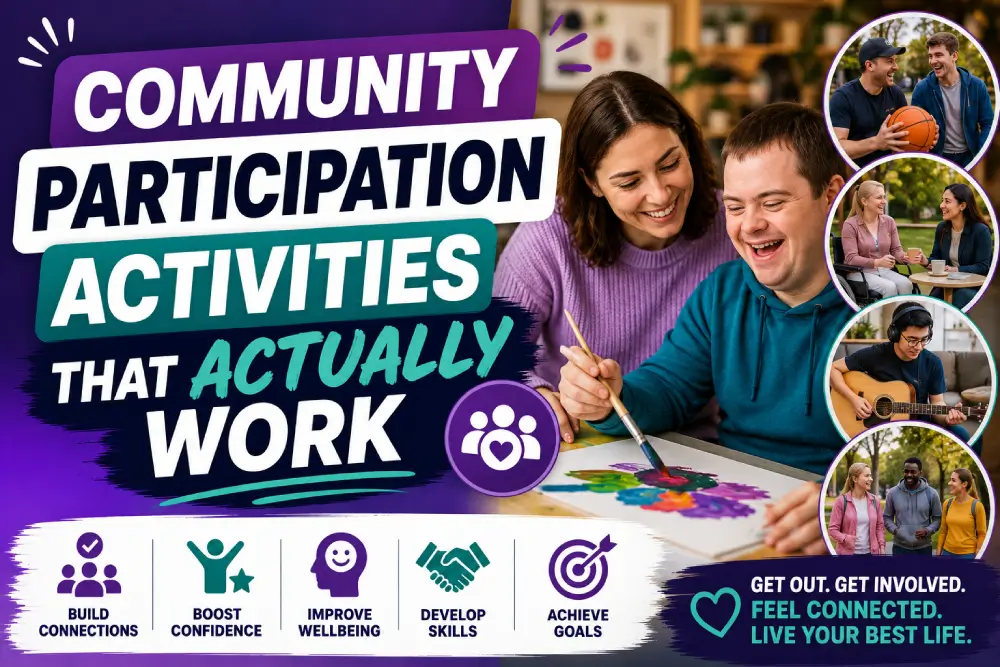
Programs for specific interests (art, music, sport, gardening) bring together people with shared interests. Programs for specific demographics (young adults, women, people from particular cultural backgrounds) can offer connection that’s harder to find in mainstream programs. Some participants thrive in mainstream community groups; others prefer disability specific groups where the pace and dynamics are designed around participants’ needs.
Cost and Logistical Considerations
NDIS pricing for group programs is per participant per hour, but the rate is lower than one on one because the worker is shared. If you have limited Core Supports funding and want to maximise activity time, groups stretch your hours further. If you need intensive support, one on one is the only realistic option even at higher cost. Groups happen at set times in set places, so you have to fit your week around the group schedule; one on one is more flexible.
Trialling a Group Before Committing
Many programs offer trial sessions. Take advantage of these. Go for a week or two before committing. Notice whether you’re looking forward to the next session or dreading it. If after a fair trial you don’t like it, find a different program.
Combining One-on-One Support Within a Group
A worker who knows you can join you at a group sometimes, providing extra support during the activity. This is more expensive but useful in some situations, such as a participant who wants to attend a mainstream community group but needs help to fully participate.
Whether you go for one on one, group, or a mix isn’t a permanent decision. Most participants we’ve worked with have changed their mix over time as their needs and preferences have shifted.
Frequently Asked Questions
Is group support cheaper than one-on-one NDIS support?
Yes, group programs are priced per participant per hour and cost less than one-on-one support because the worker is shared.
How do I know if a group program will suit me?
Trial it. Most programs offer trial sessions — go for a week or two and notice whether you look forward to it or dread it.
Can I combine one-on-one and group support?
Yes. Many participants use one-on-one for personal care or intensive needs and a weekly group program for social connection.
What’s the difference between a day program and a social group?
Day programs run for longer blocks (often most of the day, several days a week), typically for participants post-school. Social groups are usually shorter, regular sessions built around a shared interest.
Can I change from one-on-one to group support later?
Yes, your mix isn’t locked in — most participants adjust it over time as their needs and preferences change.