Domestic assistance is one of the most underrated NDIS supports. It quietly keeps your home running so you can focus on everything else. Here’s what it actually covers, how it usually works, and how to get the most out of it.
What Domestic Assistance Covers
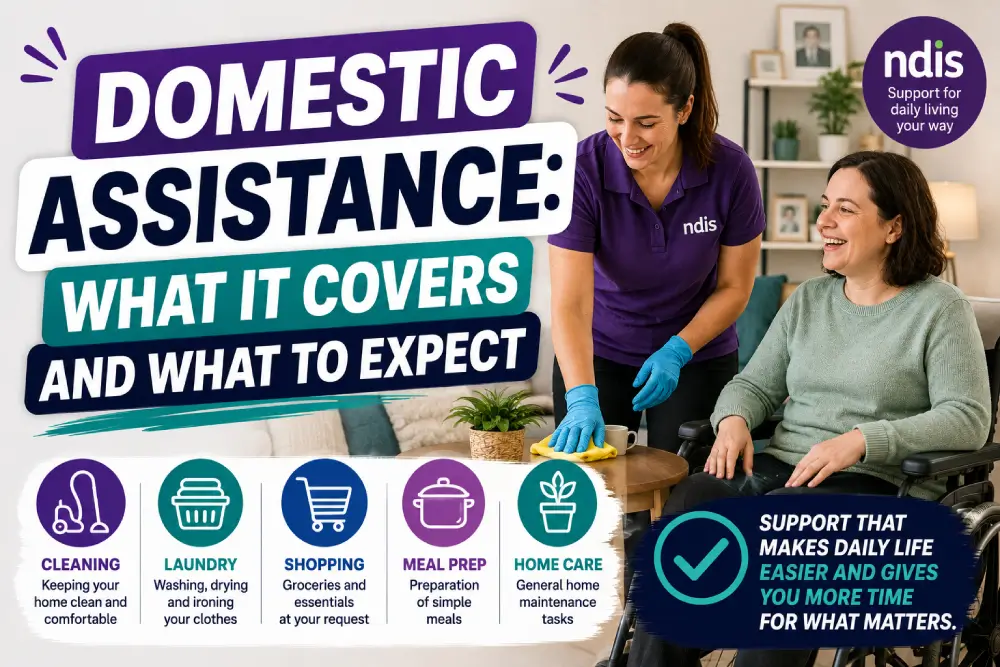
Domestic assistance is funded under Core Supports, in the Assistance with Daily Life category. It covers household tasks you can’t easily do yourself because of your disability: cleaning, laundry, dishwashing, cooking, meal preparation, light tidying, taking out bins, and grocery shopping support. Typically this means vacuuming and mopping, wiping kitchen surfaces, cleaning bathrooms, doing laundry, changing bed sheets, washing dishes, basic meal preparation, and light tidying of common areas.
What’s Usually Not Included
Heavy gardening or yard work (these often need a separate service or aren’t NDIS funded at all). Major deep cleaning you’d hire a specialist for. Pet care. Childcare. Major DIY tasks. Some of these might be covered in specific situations, but they aren’t standard domestic assistance.
How Sessions Usually Run
Most domestic assistance sessions are between two and four hours. The worker arrives, you tell them what you’d like done that visit (or follow a regular routine you’ve agreed), and they work through the tasks. Some participants prefer to direct each visit individually. Others have a standing routine that the worker follows.
Setting Up Your Routine
When you first start with a provider, take time to walk them through your home and your preferences: where things are kept, what products you use, how you like things done. The more you set up at the start, the smoother every visit is afterwards.
Choice of Cleaning Products
You provide the products. The worker uses them. If you have allergies or preferences (no fragrances, eco friendly products, halal/kosher considerations), make these clear. Some workers might suggest alternatives but they should respect your choice in your own home.
Working With You, Not Around You
If you’re at home during the visit, the worker fits in around you. They don’t expect you to leave. They communicate before doing things that might affect you, like vacuuming a room you’re sitting in.
Domestic Assistance as Skill Building
Domestic assistance can be set up as building skills, not just doing tasks. If you want to learn to cook, a worker can cook with you rather than for you. If you want to manage your own washing but need help with the heavy lifting, that’s an option too. Talk to the provider about which mode you want.
How Often You Should Have Visits
Most participants have weekly or fortnightly visits. Some have more if needs are higher, some have less if they mostly manage on their own. The right frequency is whatever keeps your home in a condition you can live with comfortably.
Combining Domestic Assistance With Other Services
Domestic assistance often happens during the same visit as personal care or social support. A morning visit might be one hour of personal care followed by two hours of domestic assistance. This is efficient and means the same worker does both, which builds consistency.
What Good Service Looks Like (and What Doesn’t)
Good service: the same worker most weeks, who knows where things are kept, follows your preferences without being reminded, and notices things that need attention before doing them. Bad service: a different worker every visit who doesn’t know your routine, tasks done badly or skipped, cleaning products used wrongly, or time stretched beyond what’s reasonable.
Handling Issues With Your Domestic Assistance
If something isn’t being done well, name it specifically. “I’d like the bathroom done more thoroughly. Last week the soap scum on the shower glass wasn’t cleaned.” A reasonable worker takes that on board. If they don’t, talk to the provider. If the provider doesn’t act, switch.
Keeping the home livable is invisible work, but it makes a huge difference to quality of life. Done well, domestic assistance frees up your energy for the things that matter more.
Frequently Asked Questions
What household tasks does NDIS domestic assistance cover?
Cleaning, laundry, dishwashing, basic meal preparation, changing bed sheets, and light tidying — funded under Core Supports, Assistance with Daily Life.
Does domestic assistance include gardening or pet care?
No, these usually fall outside standard domestic assistance and often need separate arrangements or aren’t NDIS funded at all.
Do I need to provide my own cleaning products?
Yes, typically. Let your worker know about any allergies or product preferences so they can use what’s right for your home.
How often should I have domestic assistance visits?
Most participants have weekly or fortnightly visits, though this varies based on how much help you need to keep your home comfortable.
What should I do if domestic assistance tasks aren’t done properly?
Give specific feedback first. If issues continue, raise it with the provider, and switch providers if it’s still not resolved.