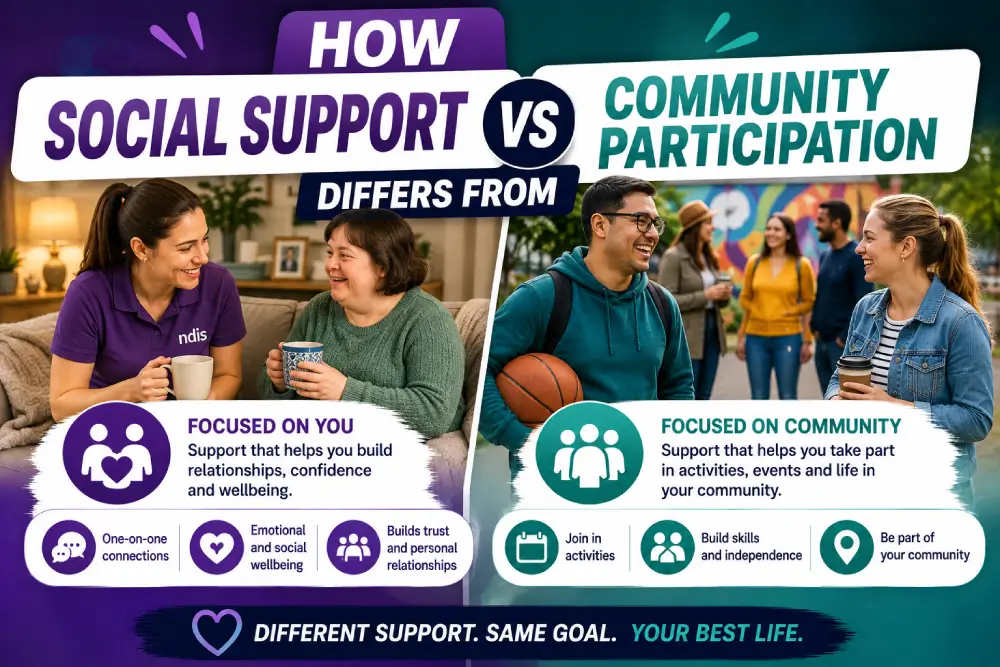
These two NDIS support types overlap and confuse people. They’re funded similarly. They both involve a support worker spending time with you. But they’re meant to do different things. Here’s the practical difference.
What Community Participation Is For
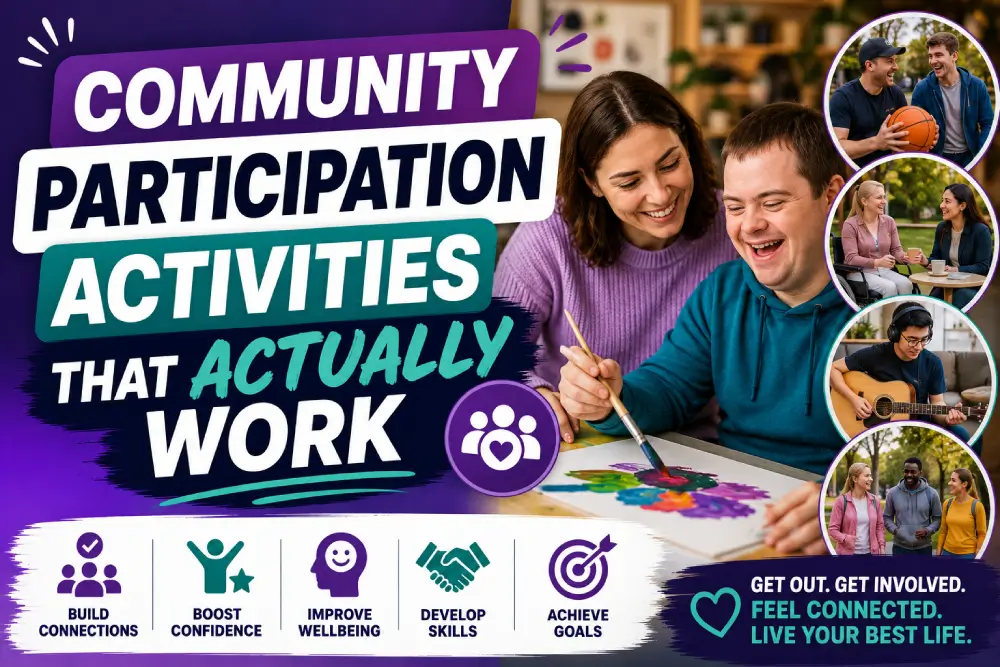
Community participation is about getting out and engaging with the wider community. Going to events, attending groups, accessing public spaces, building skills to navigate the community. The focus is external. The activities happen out in the world, with strangers and acquaintances around.
What Social Support Is For
Social support is about connection, companionship, and emotional wellbeing. The focus is on the relationship and the participant’s social and emotional needs. It can happen at home, in the community, or both. The point isn’t getting out per se. It’s having someone meaningful in your life.
Where They Overlap in Practice
A support worker might visit you at home, you’d have a chat over coffee, then walk to the local park together. The walk is community participation. The chat is social support. The same visit covers both. Funding categories distinguish between them but the experience flows together.
When Social Support Is the Right Call
You’re isolated. You don’t have many people in your life and the few you have aren’t enough. You’d benefit from regular contact with a friendly person, not for any specific activity, just for the sake of contact.
When Community Participation Is the Right Call
You have social connections in your life but you can’t access community activities without help. Your goals involve doing more, going more places, building skills to participate. The activities themselves are the point, more than the relationship with the support worker.
How the Funding Differs
Community participation is funded under Core Supports, Assistance with Social, Economic and Community Participation. Social support can be funded under the same category, but skill building elements (mentoring, building social skills) might be funded under Capacity Building, Increased Social and Community Participation. Be clear at your planning meeting about why both are needed if you’re asking for both.
Real-Life Examples
A participant who lives alone, has limited family contact, and struggles with mental health gets weekly social support visits at home. The worker comes for two hours, they have lunch together, talk, maybe watch something on TV. The point is the connection, not what they do during the visit. This is social support.
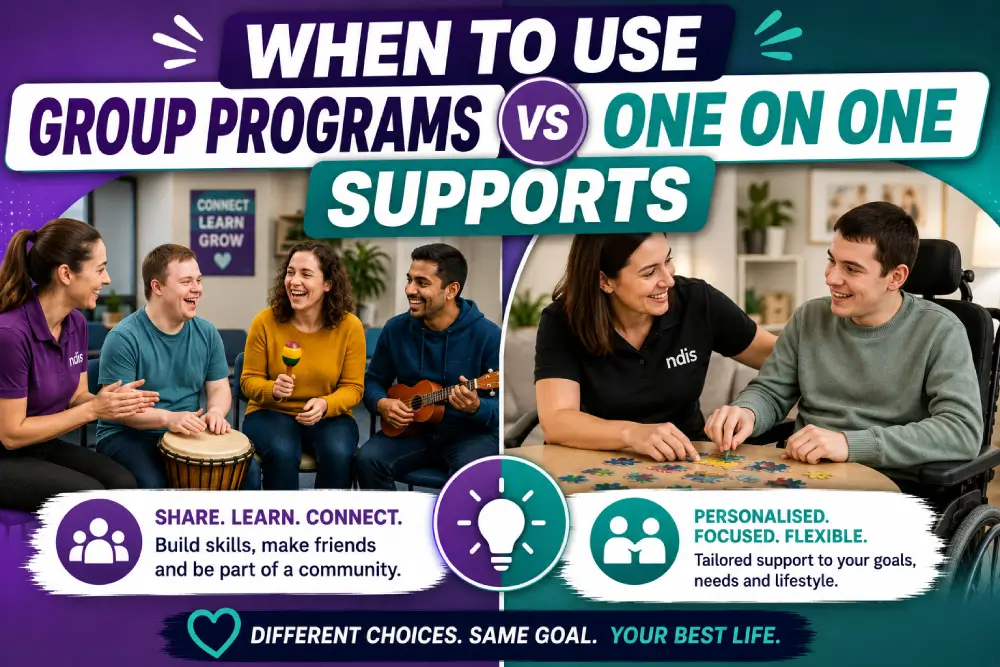
Another participant has a strong family network but wants to attend a weekly community drumming group. They need a support worker to drive them there, support their participation in the group, and bring them home. The activity itself is the point. This is community participation.
Why Worker Fit Matters More for Social Support
Community participation can work with different workers as long as they can drive and assist appropriately. Social support depends on relationship. The worker needs to be someone you genuinely connect with and look forward to seeing. Social support workers often stay with the same participant for years, and the relationship deepens over time — this is one of the things that makes worker turnover particularly painful for social support.
What Good (and Bad) Social Support Looks Like
Good: the worker shows up reliably, remembers your stories, isn’t on their phone, follows your lead about what to do during the visit, and feels like a friend who happens to be paid. Bad: the worker treats it as a chore, is a different person every time, or rushes through and leaves early.
For participants who genuinely need connection, social support isn’t a luxury. Isolation has real impacts on mental and physical health. Having someone reliable in your life, even on a paid basis, can make the difference between a hard week and a manageable one.
Frequently Asked Questions
What’s the difference between NDIS social support and community participation?
Social support focuses on connection and companionship; community participation focuses on getting out and engaging with activities in the wider community.
Can I have both social support and community participation funding?
Yes, though you’ll need to be clear at your planning meeting about why each is needed.
Does social support have to happen outside the home?
No, social support can happen at home, in the community, or both — the focus is the relationship, not the location.
Why does worker fit matter more for social support?
Because social support depends on genuine connection over time, whereas community participation can work well with different workers as long as they assist appropriately.
Should I raise social support at my next plan review?
If isolation is part of your situation and you haven’t had dedicated social support funding before, it’s worth raising at your next review.