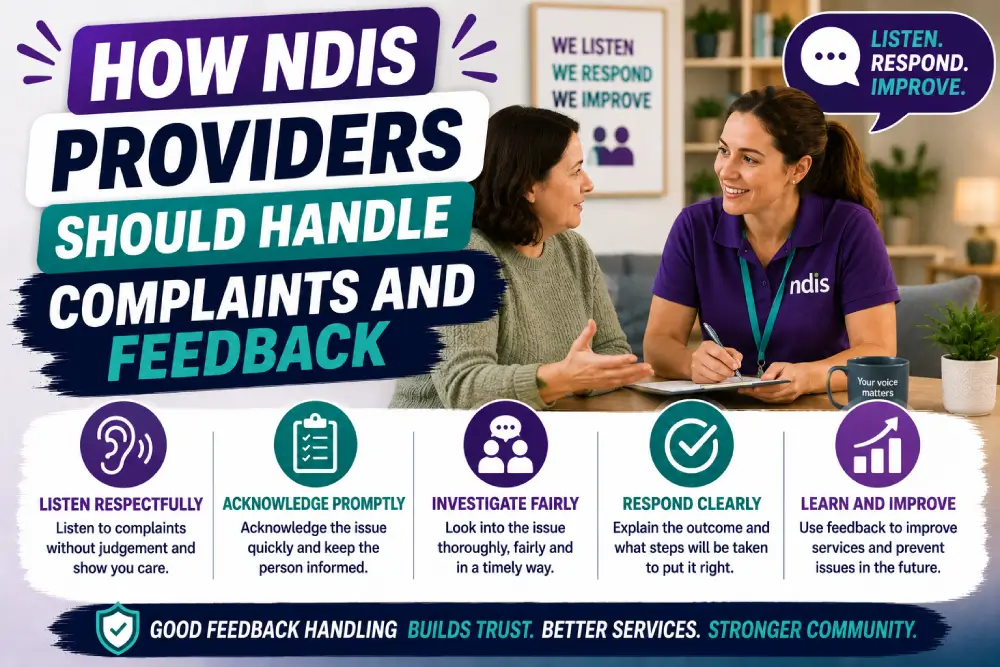
Complaints aren’t fun for anyone. But they’re how problems get fixed. A good provider treats complaints as useful information, not as attacks. Here’s what good complaint handling looks like and what to do when a provider doesn’t measure up.
Every Registered Provider Must Have a Complaints Process
This is a requirement under the NDIS Practice Standards. The process should be clear, accessible, and result in action. You should be able to make a complaint without fear of services being withdrawn.
What Good Complaint Handling Looks Like
The provider acknowledges your complaint quickly, usually within a day or two. They listen properly without interrupting or defending. They investigate by talking to the worker involved if relevant. They get back to you with what they’ve found and what they’re doing about it. They tell you how to escalate if you’re not satisfied.
What Bad Complaint Handling Looks Like
The provider deflects, makes excuses, or blames you. They take weeks to respond. They investigate by just asking the worker their version of events and accepting it without question. They give vague responses and don’t tell you about your right to escalate.
When to Complain
Anything that’s affecting your service: a worker not following your routine, not turning up, behaving inappropriately, a provider not responding to communication, billing errors, safety concerns. None of these are too small. Naming issues early prevents them from becoming bigger problems.
How to Make a Complaint Effectively
Be specific. “On Tuesday March 5th, the worker arrived 45 minutes late and didn’t apologise” is more useful than “the worker is always late.” Document dates, times, and what happened. Send the complaint in writing (email is fine) so there’s a record. Be clear about what you’d like to happen as a result.
What You Can Ask For
A change of worker. Different scheduling. Better communication from the office. A refund or correction if there’s been billing wrongdoing. A formal apology. An assurance that the issue won’t recur. What’s reasonable depends on what happened.
Escalating Within the Provider
If the worker handling your complaint isn’t resolving it, ask to speak to their manager, then the provider’s CEO or owner if needed. Keep going up until you reach someone who can act. Don’t accept fobbing off — push back and ask for specific actions and timelines.
Escalating to the NDIS Commission
If the provider isn’t resolving your complaint, you can take it to the NDIS Quality and Safeguards Commission. Their complaint line is 1800 035 544. You don’t have to have exhausted all internal options first, though usually it’s worth trying internal channels first.
Other External Escalation Options
State based health complaints commissions for issues involving health services. The Australian Human Rights Commission for discrimination issues. Police if there’s been a crime. Legal Aid for issues involving legal rights.
Documenting Incidents
Keep notes of significant events: date, time, what happened, who was involved, what was said. Photos if relevant. Texts or emails about the issue. This evidence becomes important if the matter escalates.
Positive Feedback Matters Too
If your worker is great, tell the provider. Specific positive feedback helps the provider understand what’s working and is encouraging for the worker. Providers should also learn from patterns of complaints, whether about a particular worker or about office processes, rather than repeating the same warning without change.
How We Handle Complaints at Lucky Support Solutions
We have an internal process: complaints come to a manager who acts on them quickly. We try to resolve issues within a few days. We always tell participants about their right to take complaints to the NDIS Commission if they’re not satisfied with our response.
If you’re not getting good complaint handling from your current provider, that’s a sign to switch. Provider response to complaints tells you a lot about the organisation.
Frequently Asked Questions
Do NDIS providers have to have a complaints process?
Yes, every registered provider is required under the NDIS Practice Standards to have a clear, accessible complaints process.
How do I make an effective complaint to my NDIS provider?
Be specific with dates, times, and what happened, put it in writing, and be clear about what outcome you’d like.
What can I ask for when I make a complaint?
A change of worker, different scheduling, a formal apology, a correction of billing errors, or an assurance the issue won’t recur.
How do I escalate a complaint to the NDIS Commission?
Call the NDIS Quality and Safeguards Commission on 1800 035 544. You don’t need to have exhausted internal options first, though it’s usually worth trying.
Will making a complaint affect my services?
It shouldn’t. A registered provider’s complaint process is meant to allow you to raise issues without services being withdrawn as a result.