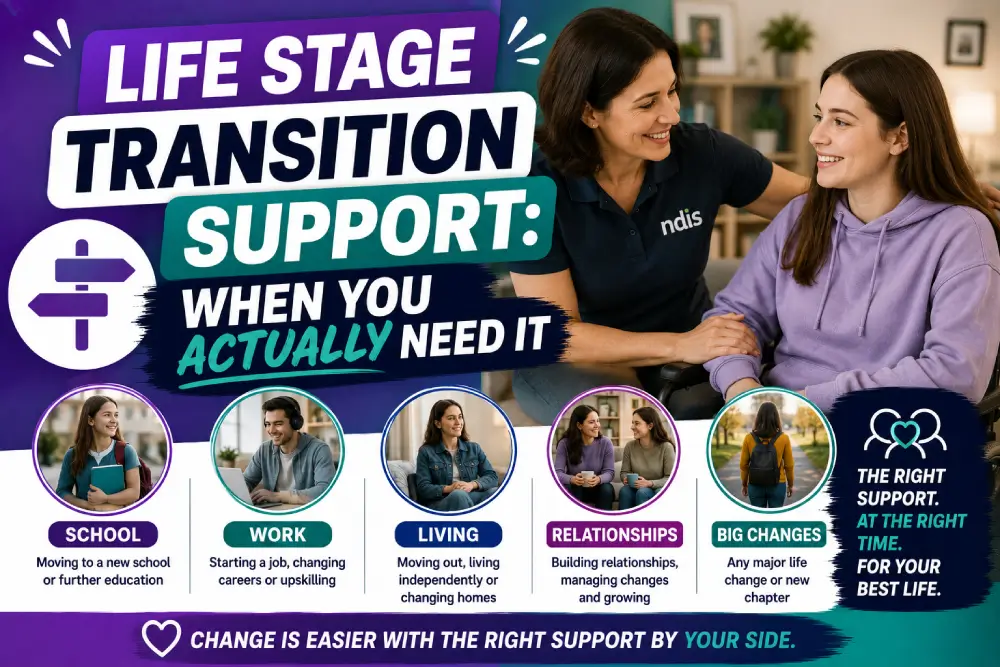
Life stage transitions are when you’re moving from one phase of life to another. Leaving school, moving out of the family home, starting work, retiring, recovering from a major health event. The NDIS funds extra support during these times because change is hard and disability adds complexity. Here’s when this funding actually matters.
When School Is Ending
For young adults with disability, leaving school is often the biggest transition of their life. School provided structure, daily routine, peer contact, and support staff. After school, all of that disappears unless you set it up deliberately. Life stage transition funding can cover help working out what comes next (TAFE, employment, day program, supported living), help building the skills you’ll need for adult life, and support during the actual transition period.
When Moving Out of the Family Home
Moving out is huge for anyone. For someone with disability, it’s massive: new environment, new routines, often new people to manage. Transition funding can support the move itself and then ongoing support as you settle into the new arrangement.
When a Primary Carer’s Situation Changes
When a parent, partner, or sibling who’s been the main carer becomes unwell, dies, or can no longer fill that role, the participant suddenly needs to take on responsibilities the carer was managing. Transition funding can help with building skills you didn’t need before, setting up new services to replace the carer’s contribution, and adjusting emotionally to the loss of someone central to your life.
When Entering Work for the First Time
Starting a job is exciting but also stressful. For participants who haven’t worked before, transition support can help navigate the first months: workplace orientation, building work routines, managing the social aspects of a workplace, dealing with anxiety about doing well.
When Retiring or Stopping Work
Suddenly having a lot more time. Loss of social connection that came through work. Adjusting to a new daily structure. For participants whose work was a major part of their identity and social network, this transition deserves support too.
When Health Changes Significantly
A new diagnosis, progression of a condition, a major surgery or illness. Transition support can help adjust to the new normal, including practical adjustments (new equipment, new routines, new services) and the emotional adjustment that comes with significant change.
What Transition Support Actually Looks Like
It’s usually time limited and intensive: more hours of support during the transition, gradually tapering as you settle in. The support might be one on one with a worker who helps with practical tasks, allied health, or coordination across the multiple parts of the transition.
How to Ask for It
At your planning meeting or review, raise the upcoming transition. Be specific about what’s changing, when, and what you’ll need help with. The NDIA usually responds well to transitions because they’re identifiable, time limited, and tied to concrete needs.
What It Shouldn’t Become
Transition support shouldn’t become an indefinite extension of regular support hours. The whole point is helping you settle into a new normal, after which your supports return to baseline (or to a different level appropriate to your new situation).
Examples of Transition Support That Worked
A participant moved out of their family home into a unit. They had transition funding for three months that paid for daily support workers helping them learn cooking, cleaning, managing bills, and navigating their new neighbourhood. After three months, they tapered down to twice weekly visits, and after six months were managing well with three visits a week.
Another participant had a stroke that significantly changed their abilities. Transition funding paid for intensive OT and physio for nine months as they adapted, plus support workers helping them relearn daily routines.
Why Some Transitions Are Harder to Fund
Transitions don’t always have clear start and end dates. A participant whose carer is gradually declining isn’t in a transition, they’re in an extended adjustment, and the NDIA sometimes resists funding transitions without neat boundaries. Documentation helps: letters from health professionals describing the transition, evidence of what’s changing and when, and clear plans for what supports will look like before, during, and after.
Frequently Asked Questions
What is NDIS life stage transition support?
Extra, usually time-limited support funded during major life changes such as leaving school, moving out, starting work, or a significant health change.
Is transition support time-limited?
Generally yes. It’s designed to help you settle into a new normal, then supports typically taper back to baseline or an appropriate ongoing level.
Can I get transition support for moving out of the family home?
Yes, this is one of the most common uses, covering both the move itself and settling into a new living arrangement.
What happens when my main carer can no longer support me?
Transition funding can help build new skills and set up replacement services, alongside emotional adjustment support.
How do I ask for transition support at my plan review?
Be specific about what’s changing, when, and what help you’ll need — clear, time-limited requests are usually well received.