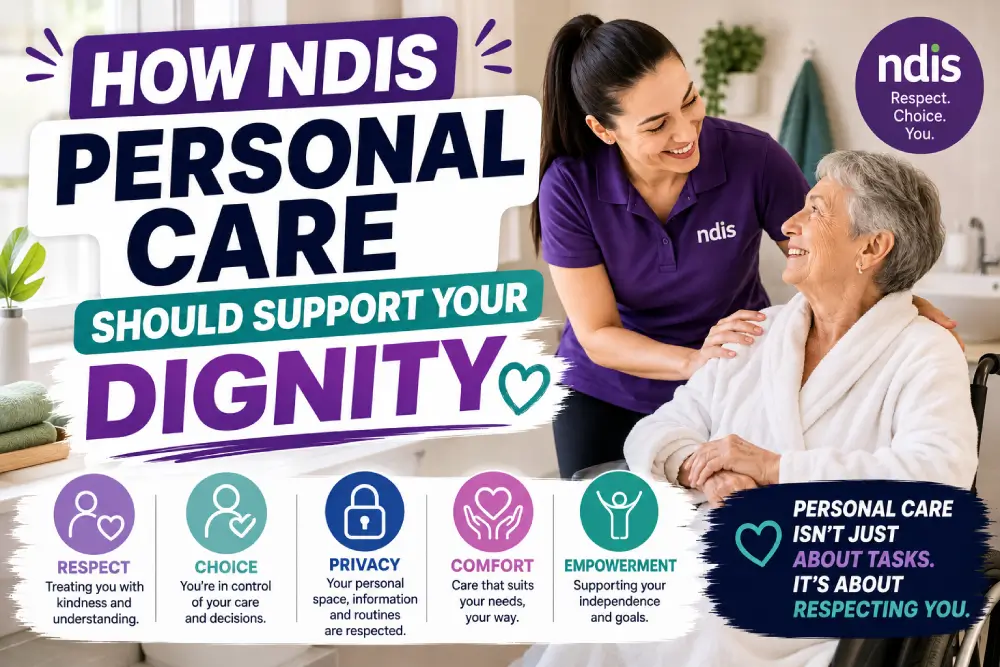
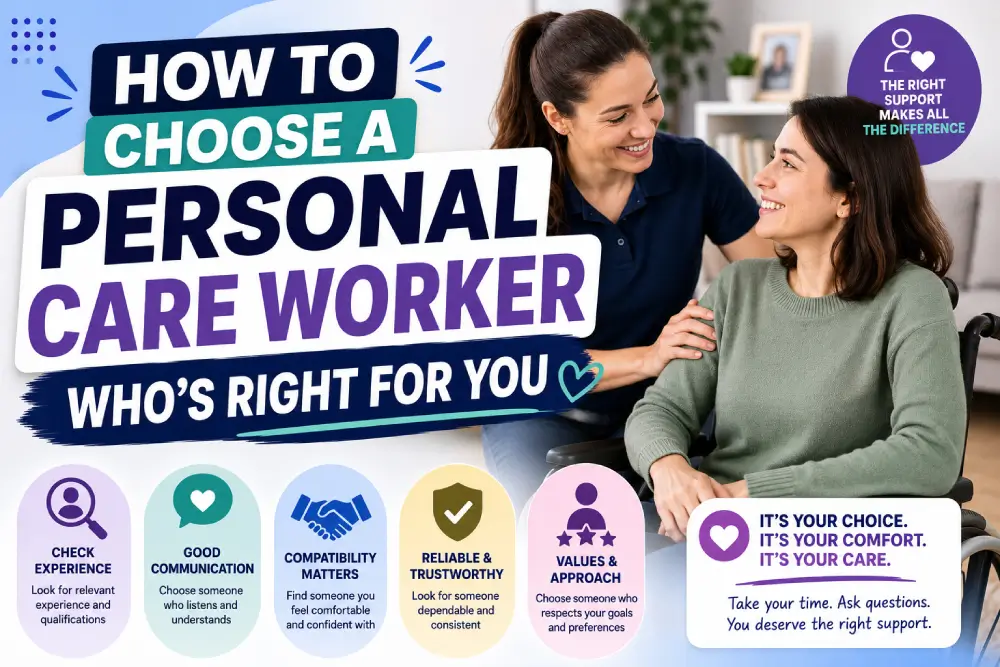
Personal care is the most intimate kind of NDIS support. Someone is helping you with showering, dressing, toileting, and other private daily activities. Getting the right match between you and your support worker matters more here than for any other service. Here’s how to think about it.
Skills and Qualifications Come First
Your worker needs current NDIS Worker Screening Check, police check, and first aid. Most have a Certificate III or IV in Individual Support or Disability. Beyond paper qualifications, they need actual hands on skills relevant to your needs. If you require specific transfers (bed to chair, chair to toilet), the worker needs to know how to do those safely. If you have a catheter or stoma, they need training on that. Don’t assume a generic disability support worker has the specific skills for your situation. Ask.
Personality Matters More Than You’d Think
The worker is in your home, in your bathroom, with you at the start and end of your day. If they irritate you, it shows up fast. If they don’t pick up on social cues, that becomes uncomfortable in private settings. If they talk constantly when you’d prefer quiet, you’ll want to scream by week three. Spend time on the personality fit during initial meetings.
Gender and Cultural Preferences Are Valid
A lot of women prefer female support workers for personal care. Some men prefer male workers. Cultural and religious considerations may apply. Whatever your preferences, state them upfront. A good provider will work to match you with someone you’re comfortable with, and won’t make you feel awkward about asking. If English isn’t your first language, having a worker who speaks your language can change everything.
Why Consistency Is Non-Negotiable
You shouldn’t have a different person showing up every other day. Personal care works on routine and trust, both of which take time to build. Ask any provider you’re considering: who will my regular worker be, and how often will I see different workers? If they can’t answer or they describe a rotating pool of workers, look elsewhere.
Watching the First Interactions
The first time a worker meets you, they should ask questions, observe, and follow your lead about how things are done. Workers who walk in and start doing things their own way are a problem. Workers who ask you about your routine and respect your preferences are more likely to be a good fit. Communication style matters too — some workers are chatty, some are quiet, some are formal. None of these are wrong, but they need to match what you want.
Trust Your Instincts on Safety
Personal care involves trust. If something about a worker makes you uneasy, take it seriously. You don’t have to justify your discomfort. If you don’t feel safe, that’s reason enough to ask for a different worker. A good provider will accommodate that without making you feel bad.
Practical Things to Check
Are they on time? Do they introduce themselves properly? Do they wash their hands? Do they wear appropriate clothing for the work? Do they bring or use the equipment they need? These things sound basic, but they tell you a lot about how the worker approaches the job.
Backup Arrangements When Your Worker Is Away
Your regular worker will sometimes be sick, on leave, or unavailable. Good providers brief replacement workers on your routine before they start. Bad providers send a stranger who doesn’t know anything about you. Find out which kind you’re dealing with, and ask about the same worker doing different services versus different workers for different services — both are reasonable, but find out what your provider can offer.
Don’t Put Up With a Bad Match
If after a few weeks the worker isn’t right, tell the provider. A reasonable provider will try to find someone better. An unreasonable provider will pressure you to make it work. The first reaction to your concerns tells you a lot about whether to stick with that provider at all. Watch for power dynamics too — a worker who oversteps (gossiping about other clients, making comments about your home, pushing their views on you) is a problem regardless of how good their hands on care is.
Personal care is sustained, regular, and personal. The right worker can become someone you’re genuinely glad to see every morning. The wrong one can make every day a small ordeal. Take the time to find the right match. It’s worth it.
Frequently Asked Questions
What qualifications should an NDIS personal care worker have?
A current NDIS Worker Screening Check, police check, and first aid certificate at minimum, plus usually a Certificate III or IV in Individual Support or Disability and specific training relevant to your needs (transfers, catheter care, etc.).
Can I request a male or female support worker?
Yes. Gender preferences, along with cultural and religious considerations, are valid and should be raised upfront with your provider.
Should I have the same personal care worker every time?
Ideally yes. Consistency builds the routine and trust that personal care depends on. A good provider can tell you clearly who your regular worker will be.
What if my personal care worker isn’t the right fit?
Tell your provider. A reasonable provider will work to find someone better rather than pressuring you to make it work.
What happens if my regular worker is sick or on leave?
A good provider has backup workers who are briefed on your routine in advance, rather than sending someone unfamiliar with your needs.