Your first NDIS planning meeting can feel like a job interview where you don’t know the questions. That’s not great when the outcome decides what supports you get for the next year or two. Here’s what actually happens, based on what our participants in Western Sydney have told us about their experiences.
Who You’ll Meet With in Mount Druitt and Blacktown
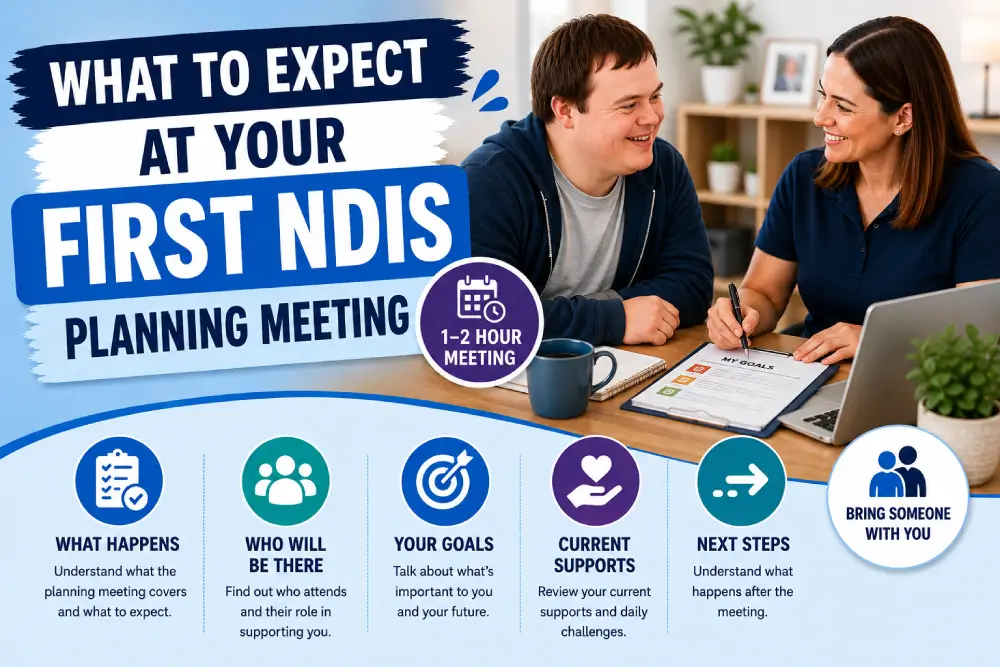
The meeting usually runs for one to two hours. It’s with a Local Area Coordinator (LAC) if you’re under 65, or with an NDIA planner if your situation is more complex. In Mount Druitt and Blacktown, most people meet with an LAC from one of the partner organisations contracted by the NDIA. The meeting can happen in person at their office, over the phone, or at your home. You can choose what suits you. Home meetings are sometimes useful because the planner can see your living situation directly, but they’re not for everyone.
Bringing Support to Your Meeting
You can bring someone with you. A family member, a friend, an advocate, your support coordinator if you have one. For first meetings especially, having another set of ears in the room helps. People miss things when they’re nervous or trying to explain something difficult on the spot. The person you bring doesn’t have to say anything. They’re there to listen, take notes, and remind you afterwards what was discussed.
What the Planner Will Ask You
The planner will ask questions about your day. What does a typical Monday look like? What do you struggle with? What do you do for fun? Who helps you and how often? What would you like to do that you can’t do now? They’re trying to build a picture of your life, not just tick boxes. The more specific you can be, the better. “I can’t shower without help” is more useful than “I have mobility issues.” “My mum drives me to the GP twice a month because I can’t manage the bus on my own” is more useful than “I have transport difficulties.”
Setting Goals That Actually Reflect What You Want
They’ll also ask about your goals. This part trips people up. Goals don’t have to be huge life ambitions. They can be practical things like “I want to keep living in my own home” or “I want to get to my GP appointments without relying on my daughter to drive me” or “I want to spend at least one afternoon a week out of the house doing something I enjoy.” Whatever matters to you is fair game. The NDIS is supposed to help you live a better life, not transform you into a different person.
How to Prepare Before You Go
What you say at this meeting shapes your plan. So before you go, write things down. List what you struggle with each week. List what you’d like help with. List the goals you want to work on. Bring this list and read from it if you need to. Nobody will think less of you. Most people who do well in planning meetings have prepared something written.
Don’t Forget Your Informal Supports
It’s also worth thinking about what supports you currently rely on that aren’t paid for. If your sister does your washing, that’s a support. If a neighbour drives you to the shops, that’s a support. If you skip social events because nobody’s available to take you, that’s an unmet need. Mention these things. Planners sometimes assume informal supports will continue indefinitely, which isn’t always realistic.
What Happens After the Meeting
After the meeting, your plan gets drafted by the planner. You’ll usually see a draft a few weeks later. If something’s wrong or missing, say so. Plans can be adjusted before they’re finalised. Once the plan is approved, you can start using your funding. The plan will list specific budgets across Core Supports, Capital Supports, and Capacity Building Supports. It will also list goals and any stated supports.
Practical Tips for the Day
Some practical things that make first meetings go better. Bring water and a snack. The meetings are often longer than expected. Take breaks if you need them. If something the planner says doesn’t make sense, ask. They use a lot of jargon and they sometimes forget that participants don’t speak the same language. There’s no question that’s too basic.
Getting Help If You Feel Overwhelmed
If you’re feeling overwhelmed by the whole thing, you’re not alone. Most people we talk to find their first plan confusing. Our team is happy to have a conversation with you before or after your meeting if you want to talk through what to expect or what to do next. We won’t try to sign you up to anything. We just know how the process works and we’re happy to share what we’ve seen.
The first plan is rarely perfect. Almost everyone we work with has needed adjustments at their first review. That’s normal. The goal of your first meeting is to come away with a plan that gets you started, not one that’s set in stone forever.
Frequently Asked Questions
How long does a first NDIS planning meeting take?
Most first planning meetings run between one and two hours. It can feel longer if a lot of ground needs covering, so it’s worth setting the day aside rather than squeezing it between other commitments.
Can I bring someone to my NDIS planning meeting?
Yes. You can bring a family member, friend, advocate, or support coordinator. They can take notes and help you remember details afterwards, and they don’t have to speak unless you want them to.
What should I bring to my first NDIS planning meeting?
Bring a written list of what you struggle with each week, what you’d like help with, and the goals you want to work on. Water and a snack help too, since meetings often run longer than expected.
Can my NDIS plan be changed after the planning meeting?
Yes. You’ll usually see a draft of your plan a few weeks after the meeting. If something’s wrong or missing, you can raise it before the plan is finalised, and plans can also be reviewed later on.
Who runs NDIS planning meetings in Mount Druitt and Blacktown?
Most participants under 65 in Mount Druitt and Blacktown meet with a Local Area Coordinator (LAC) from an NDIA partner organisation. More complex situations may involve an NDIA planner directly.